Key Takeaways
- The best Miami paint colors are chosen for the climate first and the trend second, because intense UV, salt air, humidity, and stucco all change how a color looks and how long it lasts.
- Light Reflectance Value (LRV) is the single most useful number on a paint chip here: mid-to-high LRV bodies in the 55 to 75 range usually beat both blinding white and heat-absorbing dark colors on a full-sun Miami wall.
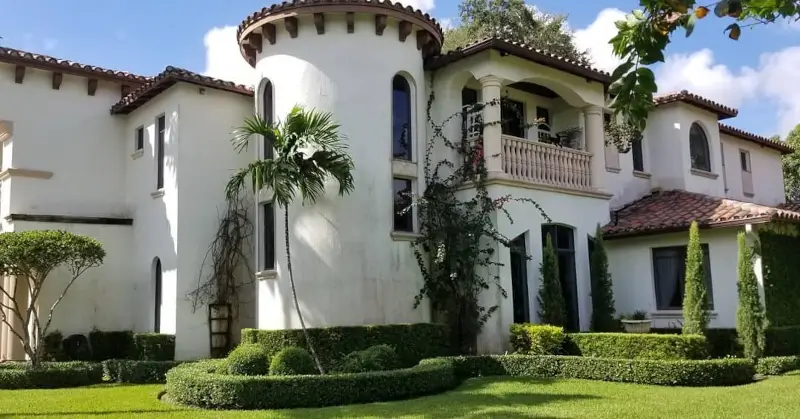
- Exterior paint colors should follow your home’s architecture, with warm whites and earth tones for Mediterranean Revival, pastels for Art Deco, and soft coastal blues and greiges for contemporary builds.
- Interior paint colors work best when matched to each room’s natural light and use, with humidity-rated finishes anywhere steam shows up.
- If your home sits in Coral Gables or the Miami Beach historic district, your color may need board approval before a brush touches the wall.
Choosing Miami paint colors is less about picking a pretty shade and more about picking one that survives the sun, salt, and stucco it has to live on. The short version: for exteriors, lean on fade-resistant warm whites, sand and ochre earth tones, soft coastal blues, and well-tested pastels, and keep the body color in a mid-to-high light-reflectance range so it neither bleaches out nor bakes. For interiors, match the color to each room’s natural light and use a humidity-rated finish wherever steam shows up. The rest of this guide walks through exactly how to choose Miami paint colors that look right and last.
We paint homes from the bay to the Gables every week, so the recommendations below are built on what actually holds up on a South Florida wall, not on a national color chart that ignores our weather.
Why Miami’s Climate Changes Your Paint Choices
Miami gives paint a harder life than almost anywhere in the country, and that is the real starting point for choosing Miami paint colors. We average well over 240 sunny days a year, summer humidity sits high for months, and homes near the water take a steady dusting of salt. All three forces attack color. UV breaks down pigment and fades it, humidity feeds mildew under the wrong finish, and salt creeps into film that was not built to shed it. That is why the best paint colors for Florida homes are picked with durability in mind first, then styled second.
Heat is the part most homeowners underestimate. Dark exterior colors absorb far more solar energy than light ones, and a sun-struck dark wall can run dozens of degrees hotter than the air around it. That heat speeds fading, stresses the coating, and pushes your cooling bill up. The U.S. EPA notes that exterior walls made more reflective with lighter paints reduce heat gain and cooling load much the way a reflective roof does. Color is not only a look here. It is part of how the house performs, which is why smart Miami paint colors start with the sun rather than the swatch.
This is where LRV earns its keep. Light Reflectance Value runs from 0 (absolute black, absorbs all light) to 100 (pure white, reflects all light), and it is printed on the back of nearly every paint chip. On a full-sun Miami elevation, the practical sweet spot for a body color is usually an LRV in the 55 to 75 band.
That range keeps your Miami paint colors bright without the chalky, washed-out glare you get from a near-white exterior at noon, and it sidesteps the heat and rapid fade that come with very dark walls. We have repainted the same west-facing Gables elevation twice in one year because the owner insisted on a deep navy that faded to a chalky slate by the next summer, the kind of fade you only see on the south and west walls down here.
| LRV range | How it behaves on a Miami wall | Best use |
|---|---|---|
| 80 to 94 (white) | Maximum reflectivity and coolest surface, but can glare and look bleached at midday and pick up green from nearby foliage. | Trim, Mediterranean stucco, shaded elevations. |
| 55 to 75 (light to mid) | Bright and cool enough for the heat, with more depth and less glare. The reliable body range here. | Main body color on most homes. |
| 35 to 54 (mid) | Runs warmer and fades faster outdoors; rich and welcome indoors. | Accents, shutters, doors, interior feature walls. |
| 0 to 34 (dark) | Absorbs heat, fades quickest in direct sun, shows chalking soonest. | Small exterior accents only; interior moody rooms with low light. |
2026 Miami Paint Color Trends
Trends should never override climate or your home’s style, but they are useful for narrowing a field of thousands of chips down to a workable short list of Miami paint colors. The clearest movement in Miami paint colors right now is away from cool, gray-driven schemes and toward warm, nature-inspired ones. Earthy greens, soft clay and terracotta tones, warm whites, and grounded khaki neutrals are replacing the stark grays that dominated the last decade, and they happen to suit our light and landscape far better.
On exteriors, the standout trend is the warm white or soft greige body paired with a single saturated accent: a deep green or navy front door, bronze hardware, and natural wood. It reads current without chasing a fad, and the neutral body stays in the safe LRV range for the sun. On interiors, expect to see more organic greens and warm earth tones on feature walls, and a continued shift from cool gray to warm white as the default backdrop. The throughline is simple: the most popular paint colors for Miami homes in 2026 are warm, natural, and calm, which is exactly what reads well in bright tropical light.
Best Exterior Paint Colors for Miami Homes
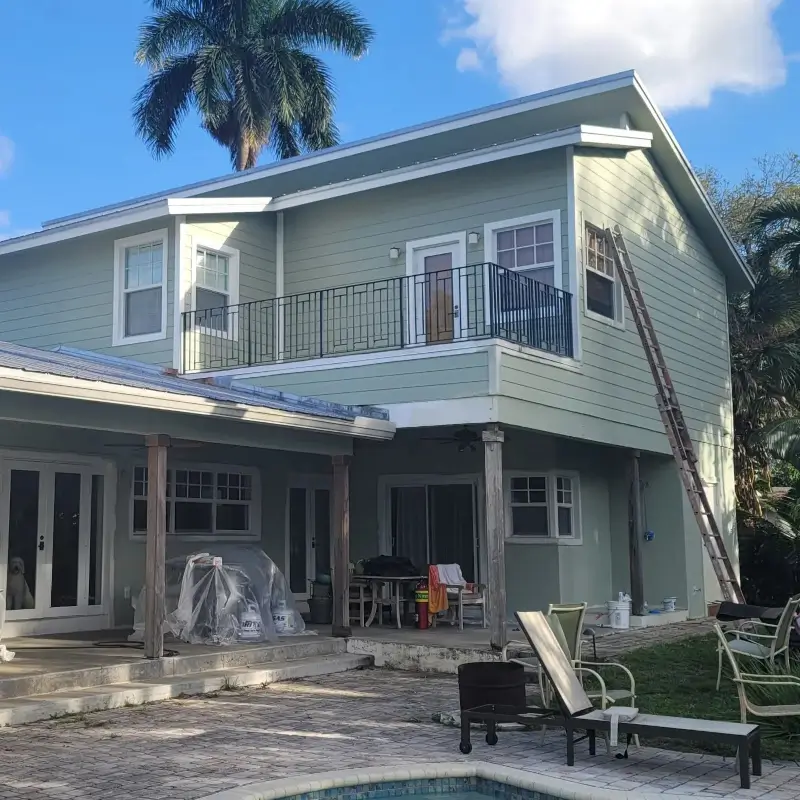
The strongest exterior paint colors for a Miami home start with the architecture. A 1925 Mediterranean Revival in the Gables, a Tropical Deco bungalow near the beach, and a 1960s concrete-block ranch each ask for a different palette, and fighting the style almost always looks off. Below is how we match palette to house, with the climate notes baked in. Across every style, plan on a quality 100 percent acrylic exterior coating, because that resin holds color and sheds water far better than cheaper blends on stucco and block. These are the Miami paint colors we reach for most on local homes.
| Home style | Body palette | Trim & accents |
|---|---|---|
| Mediterranean Revival / Spanish | Warm whites and creams, sand, pale ochre, soft sage. | Muted terracotta, bronze, or deep brown to echo the barrel-tile roof. |
| Art Deco / Tropical Deco | Soft pastels: flamingo pink, mint, pale aqua, butter yellow, lavender. | Crisp white trim with one bolder accent band or door. |
| MiMo / Mid-Century | Clean white or warm gray. | Turquoise, coral, or citron on a door or feature wall. |
| Coastal / contemporary | Cool whites, soft coastal blue, light greige. | Navy, charcoal, or natural wood for contrast. |
| CBS ranch / classic block | Light greige or warm white. | White trim with a darker front door for a clean update. |
If you want specific starting points, a few exterior paint colors come up again and again on Miami homes because they balance brightness against heat. For warm whites, Sherwin-Williams Alabaster (LRV around 82) and Benjamin Moore White Dove (around 85) read soft rather than stark in full sun. For a body with more depth, Sherwin-Williams Agreeable Gray (around 60) and Accessible Beige (around 58) sit right in the durable range. Soft sage greens and muted coastal blues round out the list for homes that want color without going dark.
Treat these as a short list of Miami paint colors to sample, not a final answer, because your roof and pavers will tilt the choice. For homes near the water, ask for a mildew-resistant exterior product and plan a yearly fresh-water rinse so salt does not settle into the film.
A few field rules cut across every palette. Keep the body in that 55 to 75 LRV band so the wall stays cool and reads true at noon. Put your darkest accent where the sun hits least, since a deep door under a shaded entry holds its color far longer than the same color on a west wall. And always check exterior paint colors against the roof and paver tones already on the house, because those fixed elements set the temperature of the whole scheme. Followed together, these habits keep your Miami paint colors looking deliberate instead of dated.
Best Interior Paint Colors Room by Room
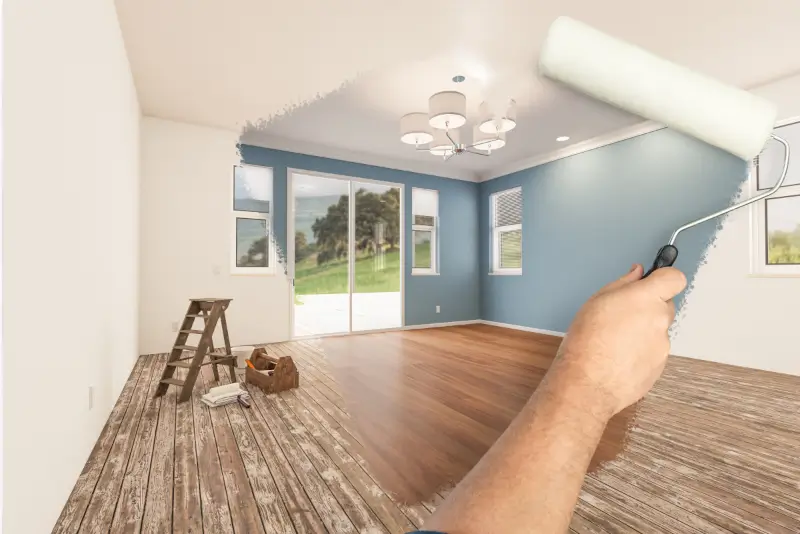
Indoors, the rules for Miami paint colors flip. You are no longer fighting UV and salt, you are working with Miami’s bright, slightly warm natural light, which makes whites read crisp and can push cool grays a touch blue. The best interior paint colors here are chosen per room, by how much light it gets and what happens in it. Strong daylight rooms can carry a moodier color that would feel heavy up north, while a low-light interior room needs a higher LRV to avoid going dim and flat.
| Room | Color direction | Why it works here |
|---|---|---|
| Living / great room | Warm white or soft greige. | Stays bright in strong daylight and flatters most furniture. |
| Kitchen | Crisp white or pale sage. | Clean and timeless; sage adds warmth without darkening the room. |
| Primary bedroom | Soft coastal blue or warm greige. | Calming mid-range tones that hold up under bright morning light. |
| Bathroom | Spa blue, soft green, or clean white. | Fresh and bright; pair with a humidity-rated finish. |
| Dining room | Deep teal, navy, or charcoal accent. | Well-lit Miami dining rooms can carry a richer, dramatic tone. |
| Home office | Muted blue-green or warm neutral. | Focused and easy on the eyes; keep LRV up in low-light rooms. |
| Kids / guest room | Cheerful mid-tone, soft yellow or aqua. | Playful but not so dark the room feels small. |
Undertone is the quiet trap with interior paint colors. A greige that looks neutral on the chip can flash pink, green, or purple once it covers a whole wall, and Miami’s warm light exaggerates the effect. The simplest defense is to hold your sample next to a sheet of true white paper, which makes the undertone jump out, then live with a test patch for a day before you commit. Get the undertone right and an inexpensive neutral looks custom. Get it wrong and even a designer color looks off, which is why undertone is the make-or-break detail behind so many Miami paint colors.
One Miami-specific caution on whites indoors: a very high-LRV white near a window full of palms or hedge will pick up a faint green cast at certain hours, because bright whites reflect the color of whatever light hits them. If that bothers you, drop to a warm white or a soft greige with a touch of body, and it disappears.
Color and Mood in Miami Light
Miami’s light is brighter and warmer than the light most national color advice assumes, and that changes how a color feels on your wall. The same gray that reads cool and sophisticated in a magazine can turn flat and bluish in a north-facing Miami room, while a warm terracotta that looks heavy elsewhere glows in our afternoon sun. Color also carries mood: soft blues and greens calm a space, warm yellows and corals lift it, and deep saturated tones add drama where the light can support them. It is one more reason Miami paint colors deserve their own playbook rather than a borrowed one.
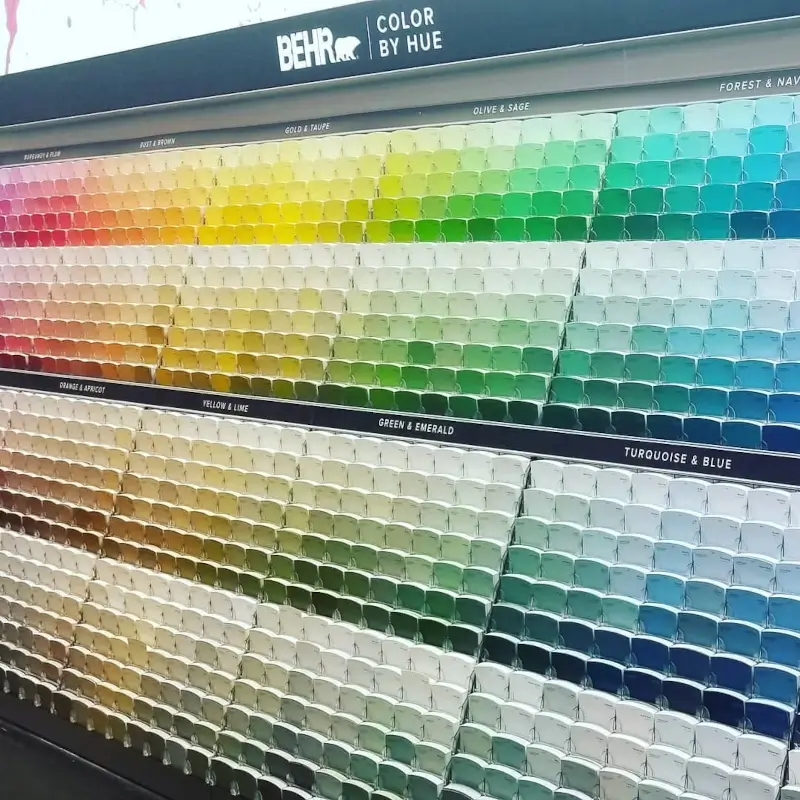
Two practical habits help you use mood without getting burned. First, decide the brightness you want using LRV, then judge undertone separately, because as Sherwin-Williams explains, two colors can share an LRV yet lean very different undertones. Second, remember that undertone is what trips people up far more than lightness. A greige that looks neutral on the chip can read pink or green once it covers a whole wall in Miami sun. The fix is simple and it is the same fix every time: test the real color, in the real room, in the light you actually live in.
Paint Finishes Built for Miami Heat and Humidity
Color gets the attention, but finish, the sheen of the paint, is what decides whether your Miami paint colors last or peel. Sheen controls how a surface sheds moisture, resists mildew, and cleans up, and in our humidity that matters as much as the shade. The guiding idea: the more moisture or scrubbing a surface sees, the higher the sheen it needs. Flat finishes hide wall flaws but hold grime and mildew, while satin and semi-gloss shrug off moisture and wipe clean, which is exactly what a steamy Miami kitchen or bath wants.
| Surface | Recommended finish | Miami reason |
|---|---|---|
| Exterior stucco / block | Flat or low-sheen 100% acrylic. | Breathes with the masonry and hides surface texture while resisting UV. |
| Exterior trim, doors, shutters | Satin or semi-gloss. | Sheds rain and salt, and wipes clean. |
| Interior living / bedroom walls | Matte or eggshell. | Smooth look with enough durability for low-moisture rooms. |
| Kitchen, bath, laundry | Satin or semi-gloss, mildew-resistant. | Handles steam and frequent wiping without breaking down. |
| Ceilings | Flat. | Hides imperfections; add mildewcide in bathrooms. |
| Interior trim and doors | Semi-gloss. | Durable and easy to clean on high-touch edges. |
For any high-humidity room, ask for a mildew-resistant additive in the paint, and make sure the surface prep includes a clean, dry, properly primed substrate. The finest color over poor prep will still fail here, and your Miami paint colors only look as good as the prep beneath them. Good prep is where a real paint job is won.
HOA, Coral Gables, and Miami Beach Color Rules
Here is the step that costs Miami homeowners the most grief: in several areas you cannot simply paint your house the color you want, which means your Miami paint colors may need a sign-off before you start. Many condo associations and gated communities keep an approved palette and require board sign-off, and two of our most distinctive cities go further with formal architectural review. Checking this before you buy paint saves you from repainting on someone else’s order.
In Coral Gables, the Board of Architects must approve nearly every exterior change, including paint color, and that applies even when you are repainting the same color you already have. The city keeps an approved exterior palette of roughly 60 colors curated to its Mediterranean Revival character, leaning into soft earth tones like muted terracotta, sand, ivory, dusty rose, sage, and pale ochre. You submit physical color samples for review, and approval typically takes a few weeks. It is a real step, so build it into your timeline rather than discovering it the week you planned to paint.
In the Miami Beach Architectural District, exterior work on a contributing historic building generally needs a Certificate of Appropriateness, and the area’s celebrated Tropical Deco look leans on historic pastels: pale pink, mint, aqua, butter yellow, and lavender, usually trimmed in white. The city has even run a grant program encouraging owners of commercial Art Deco buildings to repaint in those historic schemes. If your home is a designated or contributing structure, confirm what review applies before you commit to a color.
Everywhere else in Miami-Dade, the rule of thumb is simpler: if you belong to an HOA or condo association, request the approved color list in writing first. We paint across Miami-Dade and routinely help owners match an association palette so the project clears approval the first time.
Paint Colors for Miami Condos and Apartments
Miami runs on condos and apartments, so a guide to Miami paint colors has to cover them directly. The big difference from a single-family home is control. In most condo and apartment buildings you choose your interior paint colors freely, but the exterior, balconies, terraces, railings, and often the front door belong to the association and follow a building-wide scheme. Before you paint anything visible from outside, read your condo documents or ask the management office, because painting a balcony wall or ceiling the wrong color can trigger a violation and a forced repaint.
Inside the unit, your Miami paint colors follow the same climate logic, just dialed for smaller spaces and big windows. High-floor units take intense, glare-heavy light, so a mid-LRV interior color often reads better than a stark white that bounces the sun around. Lower or north-facing units can feel dim, which calls for a higher-LRV color to keep the room bright. In compact condo rooms, light and reflective Miami paint colors make the space feel larger, while a single accent wall adds depth without closing the room in.
Renters and investors have one more thing to weigh. If you rent, check your lease, since many Miami landlords ask for a neutral move-out color, and a safe warm white or soft greige protects your deposit. For rental units, durable, scrubbable finishes in widely-liked neutral Miami paint colors turn over cleanly between tenants and photograph well for listings. When in doubt, a calm neutral is the most flexible interior choice for any condo or apartment in the city.
How to Test Paint Colors in Miami’s Sun
No chip and no screen tells the truth about a color in Miami light. The only reliable way to choose Miami paint colors is to test the actual paint on the actual wall and watch it through a full day. Sun position, the color of your roof and pavers, and reflected light off the pool or a neighbor’s wall all shift what you see between morning and late afternoon.
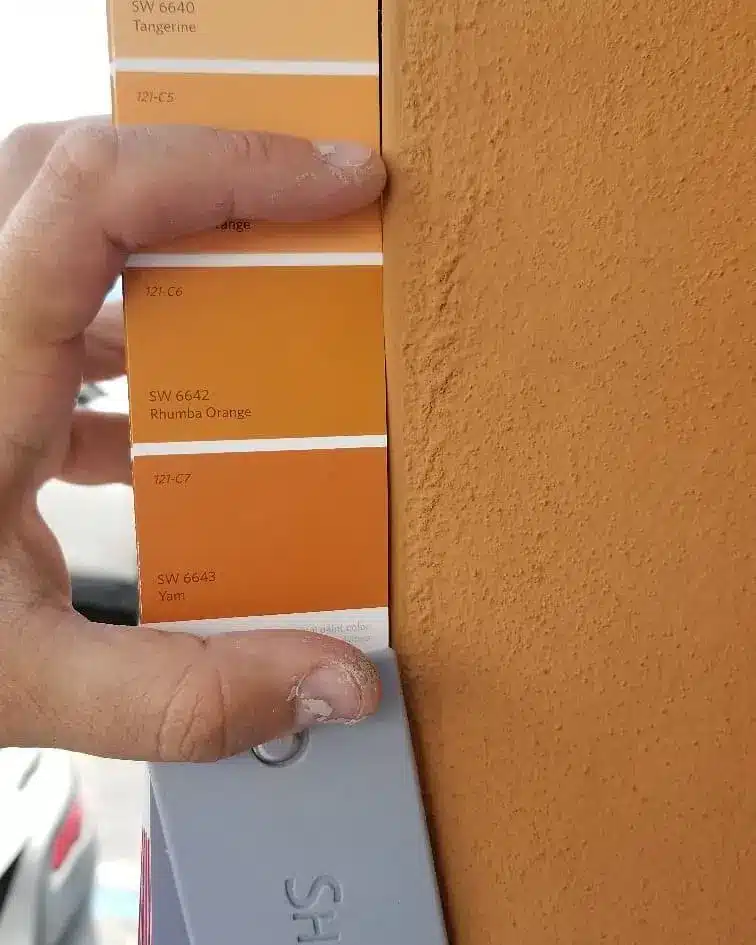
Our crews follow a simple routine you can copy with your own Miami paint colors. Paint a sample patch at least two feet square directly on the surface, or on a white poster board you can move around the house. Put samples on more than one elevation, because a color on the shaded north wall looks different on the blazing west wall. Then check the patch at three points: morning, high noon, and the golden hour before sunset. A color you can live with at all three will not surprise you. Skipping this is the most common reason a homeowner ends up repainting, and it is completely avoidable.
Not sure where to start? Our team can bring real samples to your home and test them on your walls, in your light. Book a color consultation and we will narrow it down with you.
Common Miami Paint Color Mistakes to Avoid
Most repaints we get called to fix trace back to a short list of avoidable mistakes. Knowing them up front is half the battle when you are choosing Miami paint colors, because the same errors come up again and again across the city.
- Judging color from a tiny chip. A two-inch swatch under store lighting is almost meaningless on a sun-blasted Miami wall. Always test a real patch on the actual surface.
- Going too dark outside. Deep exterior colors absorb heat and fade fast here. If you love a dark look, save it for a shaded accent, not the whole body.
- Skipping HOA or board approval. In Coral Gables, Miami Beach historic districts, and many condo communities, the wrong color can mean a forced repaint. Confirm the rules first.
- Ignoring the fixed elements. Your roof tile, pavers, and stone do not change with the paint. Choose a color that works with them, not against them.
- Buying cheap paint for the climate. Bargain coatings chalk and fade quickly in Miami sun and salt. Quality acrylic costs more up front and far less over the life of the job.
- Matching interior and exterior identically. The same color behaves differently inside and out because the light is different. Adjust the shade for each, rather than copying one to the other.
What a Professional Color Consultation Costs in Miami
Getting expert help with color is more affordable than most people expect, especially measured against the cost of repainting a whole house in the wrong Miami paint colors. There are two common routes in Miami. An independent color consultant or interior designer charges by the hour or by a flat palette fee. A painting contractor often folds a working color consultation into the estimate, sometimes at no charge or credited toward the job, because getting the color right the first time is in everyone’s interest. The ranges below are typical for the Miami market and will vary with the size of your home and the scope of the work.
| Service | Typical Miami range | Notes |
|---|---|---|
| Independent color consultant (hourly) | $75 to $200 per hour | Good for a single tricky room or a second opinion. |
| Whole-home palette (flat) | $200 to $600 | Coordinated interior or exterior scheme for the full house. |
| Consultation with your painter | Often free or credited | Frequently included when you book the painting project. |
If you are already planning to repaint, the smartest move is usually to use the painter’s color help and put your budget into quality paint and proper prep. For a sense of how material and prep choices drive a real quote, see what stucco painting costs in Miami, which breaks down the same factors that shape any exterior job here.
Ready to Choose Your Miami Paint Colors?
The right color is the one that fits your home’s style, survives Miami’s sun and salt, clears any approval your neighborhood requires, and still makes you happy at golden hour. That is a lot to balance, and getting Miami paint colors right is exactly what we do every day. Florida Painting Company has been painting interiors and exteriors across Miami for years, and our professional Miami painting services include hands-on color help, real sample testing on your walls, and a finish built to last in our climate.

Let’s Pick Your Perfect Miami Paint Colors
Get a free in-home color consultation, with real samples tested on your own walls, in your own light, by a crew that has painted Miami homes for years.
or call (786) 724-4880 today
Miami Paint Colors FAQs
Quick answers to the questions we hear most often about choosing paint colors for Miami homes, from fade resistance to approval rules.
What are the best exterior paint colors for a Miami home?
Fade-resistant choices that match your home's style win here: warm whites, sand, and earth tones for Mediterranean and Spanish homes, soft pastels for Art Deco, and coastal blues or greiges for contemporary builds. Keep the body color in a mid-to-high light-reflectance range so it stays cool and resists fading in full sun.
What paint colors hold up best in Florida sun?
Lighter, more reflective colors hold up best because they absorb less heat and fade more slowly than dark shades. High-quality 100 percent acrylic paint in a light-to-mid color resists UV far better than cheap paint in a deep tone, which is why dark exterior walls tend to need repainting soonest in Miami.
What is LRV and why does it matter in Miami?
LRV, or Light Reflectance Value, measures how much light a color reflects on a scale from 0 to 100. In Miami's strong sun it matters twice over: higher-LRV colors stay cooler and fade slower outdoors, and indoors LRV tells you how bright a color will read in each room. For most Miami exteriors, a body LRV of 55 to 75 is the reliable range.
Do I need approval to paint my house in Coral Gables?
Yes. Coral Gables requires Board of Architects approval for exterior color, and that applies even if you are repainting the same color. The city maintains an approved palette of around 60 Mediterranean Revival colors, and you submit physical samples for review, which usually takes a few weeks. Plan for that step before you buy paint.
Are there color rules in the Miami Beach historic district?
Often, yes. Exterior work on a contributing building in the Miami Beach Architectural District generally needs a Certificate of Appropriateness, and the historic Tropical Deco palette favors soft pastels with white trim. If your home is designated or contributing, confirm what review applies before choosing a color.
What are good interior paint colors for a bright Miami home?
Match the color to each room's light. Warm whites and soft greiges suit bright living spaces, soft coastal blues calm bedrooms, and well-lit rooms can carry a richer accent like deep teal or navy. In low-light interior rooms, choose a higher-LRV color so the space does not feel dim.
What paint finish is best for Miami's humidity?
Use satin or semi-gloss in kitchens, baths, and laundry rooms, ideally with a mildew-resistant additive, because those finishes shed moisture and wipe clean. Matte or eggshell is fine for low-moisture living and bedroom walls, and semi-gloss is best on trim and doors. Outside, flat or low-sheen acrylic works on stucco, with satin or semi-gloss on trim.
How should I test paint colors before committing?
Paint a sample at least two feet square on the actual surface, or on movable poster board, and place it on more than one wall. Check it in morning, midday, and late-afternoon light, since Miami sun shifts a color dramatically through the day. A shade that looks right at all three times is a safe choice.
How much does a paint color consultation cost in Miami?
Independent consultants typically charge about $75 to $200 per hour, or $200 to $600 for a full-home palette. Many painting companies include a working color consultation with the estimate, sometimes free or credited toward the job, so if you are already planning to repaint, that is usually the most cost-effective route.